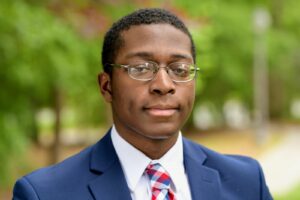
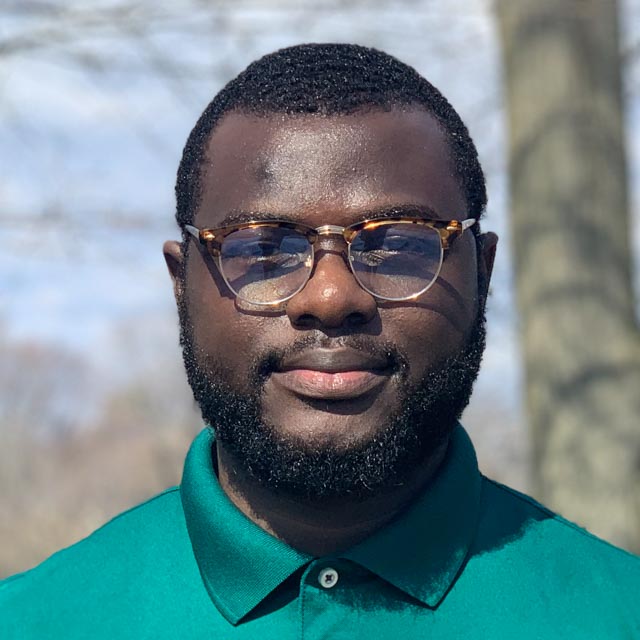
New Jersey Sea Grant Consortium is happy to have Teemer Barry represent NJSGC’s program as a 2026 John A. Knauss Marine Policy Fellow.
Throughout his fellowship, Teemer will share monthly reflections on his experiences as he explores the intersection of marine science, policy, and public service.
Follow along as Teemer documents his Knauss Fellowship journey.
June 2026 Update
2026 Knauss Marine Policy Fellow Cohort
The fellowship’s beginning was ceremonious in more ways than one. As is the norm, the first two days saw the introduction of fellows to the Silver Spring NOAA headquarters and acting Chief of Staff Laura Grimm with waffles and orchestral pop remixes. On the third day however, this orientation was met with the arrival of Capitol Hill Ocean Week (CHOW), which we were elected to help operate. It is my interpretation that the conference usually takes place far later in the typical fellowship year structure but I will admit that as the largest disruption caused by the change in start date, the alternate schedule has not produced much in the way of inconvenience.
The NCCOS Summer fellows & interns, from left to right (Felipe Arzayus, Kimani Kimbrough, Teemer Barry, Cynthia Arguilo, Sachi Mishra, Mugdha Chiplunkar, Richard Stumpf, Kari St. Laurent, Michelle (Shelly) Tomlinson, Matthew Poti, Zoya Shafique, Anais Ortega, Knauss fellow Bruna Sobrinho, and Marc Suddleson).
On June 5th, I properly began my assignment with the aid of a provided laptop and the support of kindred alumni from both the University of Maryland Eastern Shore and the Jose E. Serrano Educational Partnership Program. Perhaps the greatest boon to this period of adjustment was the overlap with several summer programs from the NOAA Earnest F. Hollings Undergraduate Scholarship to the NOAA Experiential Research and Training Opportunity (NERTO), with there being many similarly fresh faces getting acquainted with the office’s business. The first weeks began as they always do; with a great deal of literature review and orientations, constraining the scope of the analysis I was to perform closer and closer to the operations of the Mussel Watch Program. The task set ahead for the coming weeks would include the prototype creation of a service delivery map for the Mussel Watch Program’s semiannual newsletter. Ultimately, the culmination of the month’s efforts would be the successful delivery of the fellowship year’s project description and the planning of a July filled to the brim with activities and potential deliverables.
New Jersey Sea Grant Consortium’s applicant, Teemer Barry, has been selected as a 2026 Sea Grant Knauss Marine Policy Fellow!
Teemer Barry, NJSGC’s 2026 John A. Knauss Marine Policy Fellow
Teemer is one of 48 finalists chosen nationwide for this highly competitive fellowship, which places early-career professionals in legislative or executive branch offices in Washington, D.C., where they contribute scientific and technical expertise to federal policymaking on marine, coastal, and Great Lakes issues. Teemer officially began the fellowship in June 2026 as part of Sea Grant’s 47th Knauss Fellowship class. Teemer is working at the National Centers for Coastal Ocean Science (NCCOS), which is part of NOAA’s National Ocean Service (NOS), and will be sharing updates throughout his time there.
Learn more about Teemer with his Q&A:
Can you tell us a little about yourself?
I am a geoscientist studying at Rutgers University – New Brunswick, having previously graduated from the University of Maryland Eastern Shore. Most of my life prior to the beginning of my academic career had been spent in Durham, North Carolina, where my father’s incredible interest in permaculture, alongside my mother’s involvement with North Carolina’s legislative and socioeconomic proceedings, developed within me a great love for the promotion of appropriate land use practices and stewardship.
What inspired you to apply for the Knauss Fellowship?
My motivation for participating within the Knauss Fellowship stems from a deep-seated drive towards environmental stewardship and justice. Long before my career aspirations had so firmly consolidated, I had wanted to participate in community, state, and federal-level organizations that promote the appropriate care and use of the environment in ways that can sustain humanity into the far future. I see the Knauss fellowship as perhaps the most direct pathway to apply a strong research background, like the one I have developed, directly into the national stage.
There was no singular event or mentor that urged my participation in the Knauss fellowship program as much as a cumulative series of discussions with all of the mentors that I hold most dear that urged me to consider not specifically the world I wanted to serve as much as the world that I wanted to create. I have always had a comfort mediating debates and speaking to diverse audiences, perhaps even more than the comfort I have with my own research, and so with the looming timeline of graduation and uncertainty in the future I chose to aim for the Knauss fellowship.
How did your academic and research experience prepare you for this opportunity? Are there any specific projects, skills, or lessons that proved especially valuable during the application process?
My academic career, especially within the last 5 years, has done exceptionally to prepare me for this opportunity (in my opinion). Since the beginning of my academic career, I have worked to position myself as a two-fold biogeochemist, developing the ability to discern the causes of systemic shifts in gradients as well as how those shifts lead to further cascades, and a bulk-data analyst, honing my use of data work to visualize those trends for broad audience digestion. I would spend functionally each year between 2020 and 2025 working on several projects hand in hand with state and federal agencies on a bevy of topics from plankton population dynamics and historical range changes within species of interest to developing a climatology of coastal water quality. Each fellowship, internship, and project over these years has served to inform me of how research is performed throughout academic and governmental circles, how research at various levels is directly applied to legislative practice, and how the choices made at these levels cascade down into the lives of everyday individuals. My time within the Office of Protected Resources and the Protected Species Division line offices within the Northeast Fisheries Science Center will likely be the most valuable to participation within the Knauss fellowship as both directly involved my participation within regular strategy meetings, the frequent review of federal regulatory documents, and a direction of my efforts towards lasting documents as opposed to smaller iterative reports.
How are you getting ready for this next step? Have you done anything to prepare for your year as a Knauss Fellow?
Preparations for this experience have largely centered around wrapping up my thesis, paying close attention to the direction of legislation to ensure I am well informed, and reviewing the last several state and federal reports that have been critical to my research efforts. It is my hope to become far more familiar with the grants and project management side of executive work as well as congressional committee structures and proceedings through the fellowship opportunity but there has so far been no news as to how the cohort will be split. Until then, preparations have resembled a lot of report and transcript annotating.
What are you most excited (or maybe nervous) about as you start the fellowship? What do you hope to learn or experience?
I am most nervous about making the most of this opportunity. I am the type of person who thrives when given a desk, a stack of information to review, and the freedom to proverbially “dig in”. I think that the fact that this is a program that lasts for a single year while also being extremely competitive, nurtures split desires within me. For one, I want to prove myself. I want to use this opportunity to demonstrate that I can not only perform exemplary research on the national stage, but also that I can present outstanding arguments that can be recognized across political aisles for their virtue. In my head, this looks like an unflinching commitment to work as hard as I can every day and night to develop such an esteemed reputation. On the flip side, the program only lasts for a single year. Many opportunities for professional development, exploration, and even just simple personal enjoyment are likely to appear and I have worries that I may be too eager to let them pass me by in favor of a relentless commitment to what work is directly in front of me.
Looking ahead, where do you see this experience taking you? Do you have any goals or aspirations for after your fellowship year ends?
I see two major benefits that may stem from my participation in the Knauss fellowship program. Firstly, I see the simple benefit of seeing how the legal sausage is made. I will be present at the nexus of decision-making and enforcement proceedings for the ways that the environment is used across our nation. This is an experience that I feel is almost necessary for anyone in my position or who carries my mindset of wanting to play an active role in how the place they live in executes on such negotiations. Secondly, I see the development of my mediating and negotiating muscles as an extreme benefit. Within my academic career, the justification of research as important or novel is performed through the extensive presentation of facts and associated logic that is tempered by colleagues and advisors into a finished and largely accepted product. I have little to no experience directly proposing my own work over someone else’s or prioritizing a particular line of questioning over another. While I am naturally prone to negotiation, I have no occupational experience where the quality of my work is measured in the decisive adoption of one practice over another. This extends into my hopes to learn more about the grants management lifecycle, as it is a line of work that has a great deal of influence over decisions that improve the day-to-day lives of others.
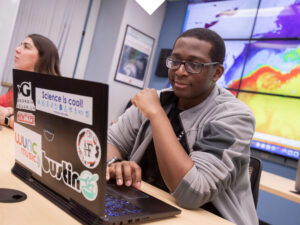
Teemer Barry and Samantha Alaimo during a Rutgers Center for Ocean Observation Leadership (RUCOOL) photoshoot.
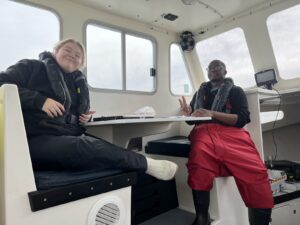
Teemer Barry and a field researcher from Monmouth University during sampling in 2023.
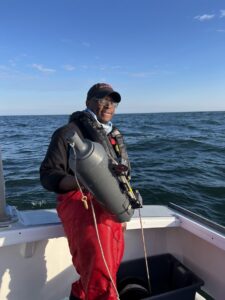
Teemer Barry during a 2023 sampling event, holding a niskin water sampling device.
Sponsored by the National Oceanic and Atmospheric Administration through the National Sea Grant College Program, this prestigious, paid one-year fellowship offers a unique opportunity for graduate and post-graduate students interested in ocean, coastal, and Great Lakes resources and the national policy decisions that impact them.
Selected fellows are placed in legislative or executive branch offices in the Washington, D.C. area, where they gain hands-on experience in federal policy, contribute scientific expertise to decision-making, and build professional skills in communication, leadership, and science policy. Alumni of the program have gone on to successful careers across government, academia, nonprofit organizations, and private industry.
Application Deadline: June 3, 2026 (5:00 PM ET)
To support prospective applicants, New Jersey Sea Grant will host a virtual Q&A session onApril 20 from 1:00–3:00 PM ET. This session will provide an overview of the application process, requirements, and tips for success. In the meantime, please refer to the attached materials for additional guidance.
If you are interested in attending the Q&A session, please email Digital Communications Associate Yazemin Yilmaz (yyilmaz@njseagrant.org) and CC Executive Director Dr. Peter Rowe (prowe@njseagrant.org) to reserve your spot.
For general questions about the application process, please contact Dr. Peter Rowe directly.
We encourage you to share this opportunity with eligible students and colleagues who may be interested in advancing their careers in marine policy.
Completed applications must be submitted by June 3, 2026 (5:00 PM ET) via email to Dr. Peter Rowe (prowe@njseagrant.org) and Kathy Elderhorst, Program Associate (kelderhorst@njseagrant.org).
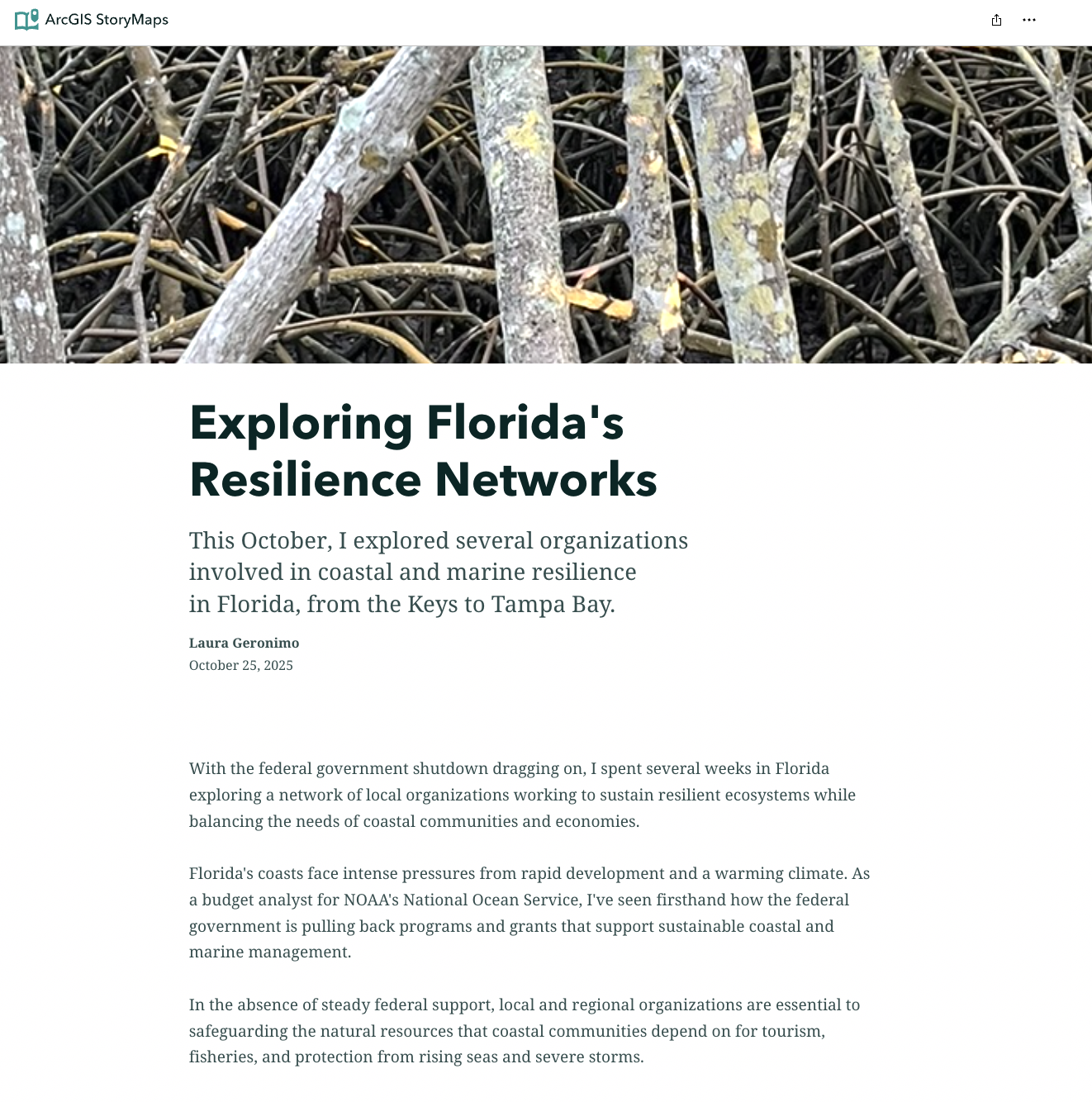
In October, LauraGeronimo traveled in Florida. Her recent StoryMap, titled “Exploring Florida’s Resilience Networks,” provides an insightful look into how communities from the Keys to Tampa Bay are enhancing marine and coastal resilience.
The beginning of Laura’s StoryMap.
The StoryMap explores innovative initiatives such as living shorelines, mangrove restoration, and community-driven partnerships aimed at reducing the impacts of environmental change. Through interactive mapping and engaging visuals, Laura demonstrates how science, policy, and local action strengthen coastal ecosystems and communities.
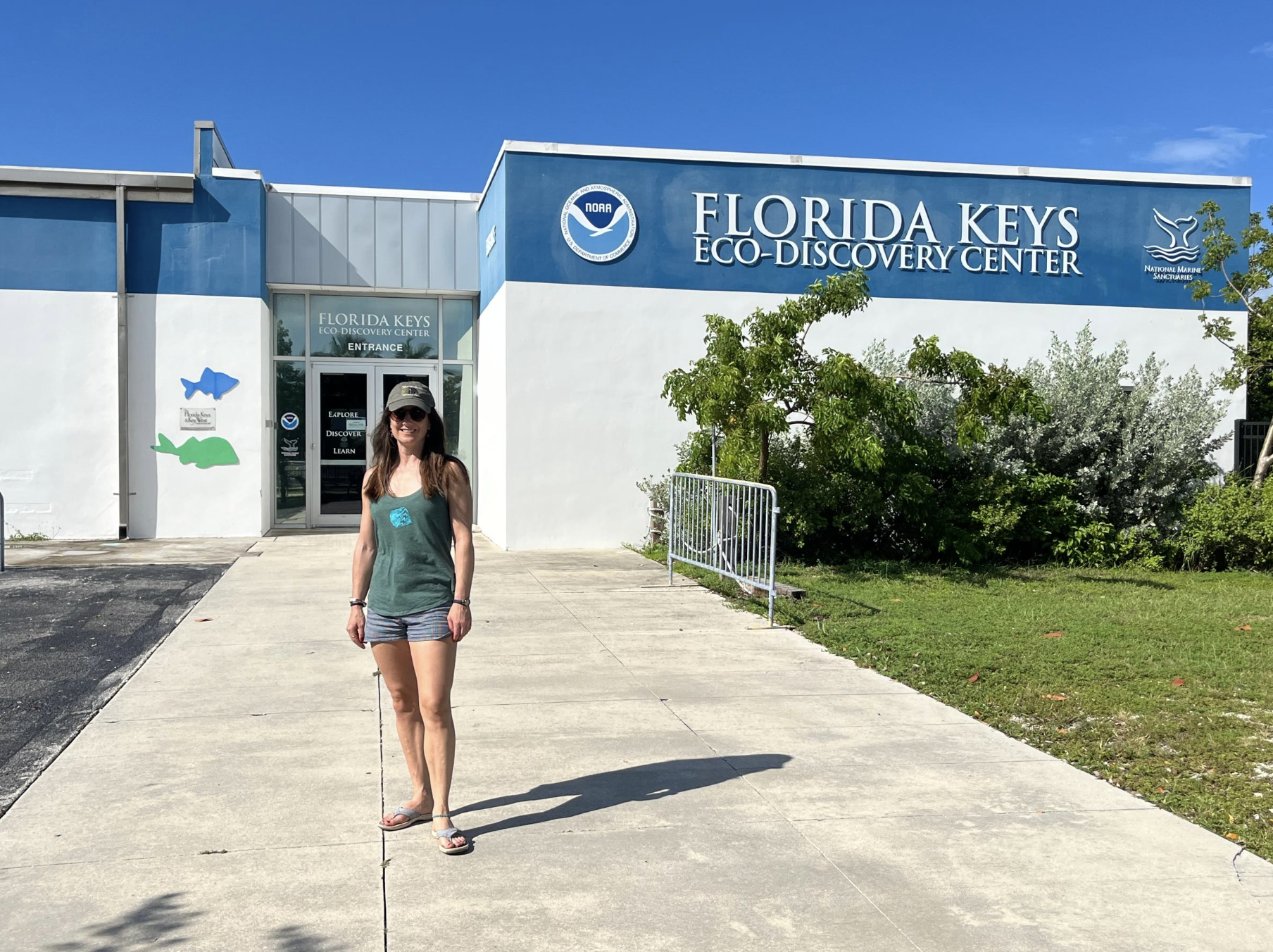
Laura at the Florida Keys Eco-Discovery Center
This project represents the Knauss Fellowship: bridging science and policy to tackle urgent environmental challenges while fostering meaningful connections. Explore the full StoryMap here.
The Sea Grant Knauss Fellowship provides a unique educational and professional experience to graduate students interested in ocean, coastal and Great Lakes resources and in the national policy decisions affecting those resources. The Fellowship, named after one of Sea Grant’s founders and former NOAA Administrator John A. Knauss, matches highly qualified graduate students with “hosts” in the legislative and executive branch of government located in the Washington, D.C. area, for a one-year paid fellowship.
Applications must be submitted to the New Jersey Sea Grant Consortium by February 19, 2025. Applicants are strongly encouraged to reach out to NJSGC or the Sea Grant program in their state one to two months prior to the state application deadline to receive application support and provide notification of an intent to apply. The applicant should allow sufficient time to schedule an interview with the eligible Sea Grant program at the program’s request. More information at seagrant.noaa.gov/Prospective.
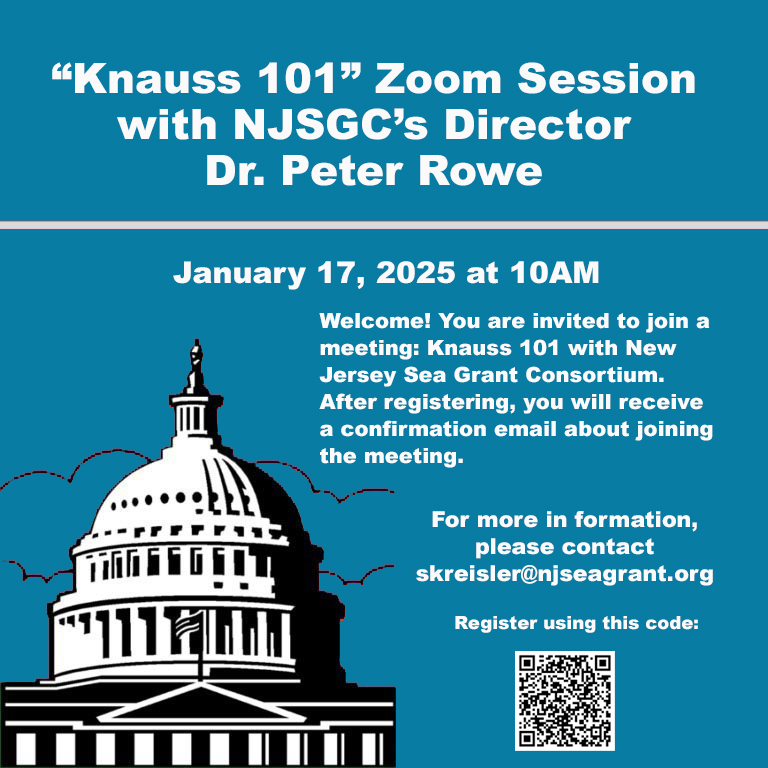
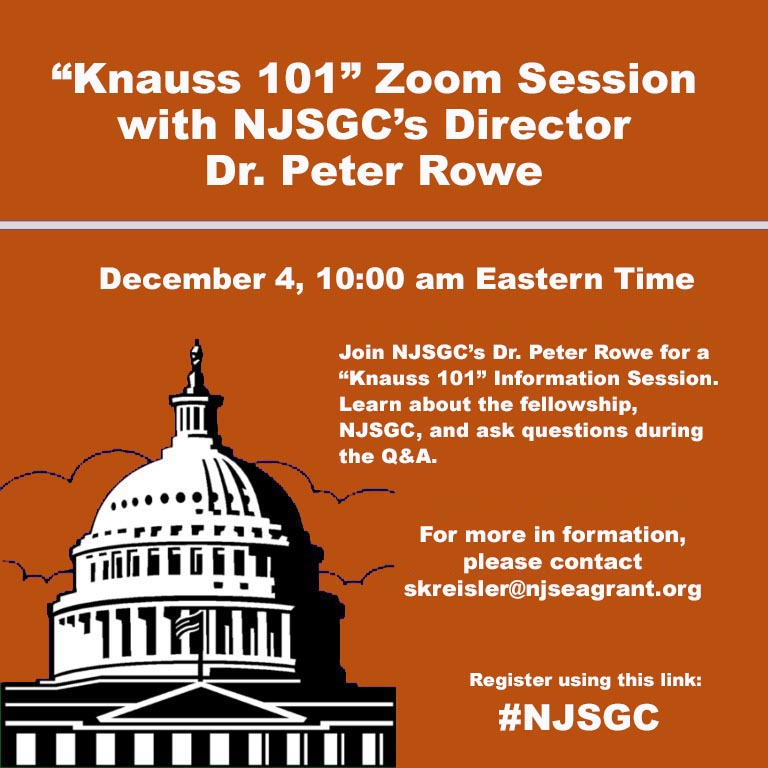
New Jersey Sea Grant Consortium will be hosting an information session on January 17, 2025 at 10AM. Register by clicking here. Please reach out to Dr. Peter Rowe at prowe@njseagrant.org with any questions.
The National Oceanic and Atmospheric Administration’s National Sea Grant College Program is thrilled to announce the finalists for the 2025 class of the Knauss Marine Policy Fellowship. This year, for the first time in program history, all eligible Sea Grant programs are represented by a diverse cohort of 88 early-career professionals who will spend the next year working alongside federal agencies or legislative offices in Washington, D.C., applying their academic expertise to critical marine, coastal and Great Lakes policy issues.
Laura Geronimo, NJSGC Knauss Finalist
This year New Jersey Sea Grant Consortium’s applicant Laura Geronimo a Post-Doctoral Associate from Rutgers University, Department of Earth and Planetary Sciences has been chosen for the Executive Branch of the fellowship.
Since 1979, the Knauss Fellowship provides graduate students a unique opportunity to gain hands-on experience developing and implementing national policy. This year’s class brings a wide range of experiences and aspirations, reflecting the breadth of the marine and coastal fields. Many of the finalists were motivated by a desire to work at the interface of science and policy, and passionate about building sustainable futures and promoting resilient ecosystems. As one finalist described, “My values are woven from the ocean’s lessons—a tapestry of interconnectedness, symbiosis among different perspectives and adaptability to change.”
As in previous years, this year’s finalists were selected through a competitive process that involved review panels composed of national experts in marine science, policy and education. Over the past 45 years, the Knauss Fellowship has supported more than 1,660 students who have significantly contributed to environmental policy and management and built lasting careers.
“This year’s Knauss Fellowship cohort exemplifies the passion and expertise necessary to address the evolving challenges facing our coasts and oceans,” remarked Dr. Jonathan Pennock, Director of the National Sea Grant College Program. “We are confident that their dedication to serving through science will lead to innovative solutions that sustain coastal and marine resources and communities for future generations.”
The Knauss Fellowship is a one-year paid opportunity for current and recent graduates from advanced degree programs to apply their scientific knowledge and experiences to current issues in science, policy, and public administration. Students who are enrolled in or have recently completed master’s, Juris Doctor and Doctor of Philosophy programs with a focus and/or interest in marine and coastal science, policy, or management apply to one of the 33 eligible Sea Grant programs.
The 2025 finalists represent 70 universities across the country—including 10 minority serving institutions—comprising 44 master’s students, 41 Ph.D. candidates and 3 J.D. candidates. They are geographers, ichthyologists, ecologists, lawyers, environmental managers and more. They represent communities across the nation and are committed to making meaningful contributions to marine policy.
The application period for the 2025 Knauss Marine Policy Fellowship is now open. The fellowship provides a one-year, paid experience for highly qualified early career professionals to work on issues related to coastal, marine and Great Lakes science and policy in offices within the executive or legislative branch of government in Washington, D.C. Learn more about becoming a Knauss Fellow from the National Sea Grant website.
Graduate students interested in marine, coastal, and Great Lakes science and policy should explore the information about the fellowship as soon as possible and reach out to New Jersey Sea Grant Consortium at least one month prior to the February 15, 2024 deadline.
To be eligible for the 2025 fellowship (which lasts February 1, 2025 through January 31, 2026),
A student must be enrolled towards a degree in a graduate program at any point between the onset of the 2023 Fall Term (quarter, trimester, semester, etc.) and February 15, 2024;
The student’s graduate degree program must be through an accredited institution of higher education in the United States or U.S. Territories;
Students are eligible regardless of nationality; domestic and international students at accredited U.S. institutions may apply; and
Applicants must have an interest in ocean, coastal and Great Lakes resources and in the national policy decisions affecting those resources.
The National Oceanic and Atmospheric Administration’s (NOAA) National Sea Grant College Program (Sea Grant) is pleased to announce the finalists for the 2024 class of the John A. Knauss Marine Policy Fellowship program. The 84 early-career professionals selected will be placed in federal government offices throughout Washington, D.C., and join the over 1,600 individuals who have participated in the program since its inception in 1979.
The Knauss fellowship is a one-year paid opportunity for current and recent graduates from advanced degree programs to apply their scientific knowledge and experiences to lasting careers in the sciences, policy, and public administration.
“Knauss fellows over the years have consistently and thoughtfully applied their unique knowledge and skill sets to developing solutions to issues that affect people across the nation,” said Jonathan Pennock, Ph.D., Director of the National Sea Grant College Program. “We look forward to welcoming the incoming class of fellows and have no doubt that they will continue the tradition of serving through science.”
Oluwafemi Soetan, Montclair State University and New Jersey Sea Grant Consortium Knauss Fellow
Oluwafemi Soetan also known as “Femi” of Montclair State University is one of the finalists that has been accepted into the 2024 Knauss Fellowship Class. Since 2021, Femi has been working to achieve his Ph.D in Environmental Science & Management. “I am beyond excited to be joining the 2024 Knauss Marine Policy Fellowship cohort. I have spent the last 3 years researching various marine and aquatic challenges for my Doctoral Program and with this fellowship, I have the tremendous opportunity to be directly involved in policy and administration concerning these very matters. Thanks to the National Sea Grant Program and the New Jersey Sea Grant Consortium for this amazing opportunity.” Says Femi.
Dr. Peter Rowe, Executive Director, notes “NJSGC is excited and pleased that Femi has been selected as a finalist for the Knauss Fellowship Class of 2024. Femi is one of the most talented, interesting, and inspiring individuals that has applied for the Fellowship through our organization. I know that he will not only be successful and gain a lot from this experience, but also that his host agency will gain from his presence there.”
This year’s class features students and recent graduates from 66 universities, including 12 minority-serving institutions (MSIs). The 84 finalists represent 30 of the 34 Sea Grant programs across the country and have completed years of coursework in fields ranging from zoology, oceanography, and marine science to environmental management, public policy, and engineering.
The 2024 class can look forward to sharing similar experiences with current and former fellows. In the 2023 class, executive appointments included placements throughout NOAA as well as with the Department of Energy, the Executive Office of the President, the National Science Foundation, and other agencies. 2023 Legislative fellows have supported the House Space and Technology Committee, Senate Committee on Commerce Science and Transportation (Majority), the House Natural Resources Committee on Water Oceans and Wildlife, and several placements in both majority and minority personal offices (House and Senate).
Former and current hosts share that fellows are exceptional additions to their offices, often leading the charge and making lasting impacts on their focus areas. Knauss fellows have been described as invaluable, essential, and integral—they not only gain experience from this opportunity but also provide valuable perspectives as experts in their fields.
In the following months, the 2024 finalists will participate in the placement week process to get to know each other and interview with potential host offices. Following placement, they will begin their fellowships in February 2024. The 2024 Knauss finalists will become the 45th class of the fellowship and will join a group of over 1,600 professionals who have received hands-on experiences transferring science to policy and management through one-year appointments with federal government offices in Washington, D.C.